PRP, or platelet-rich plasma, is a treatment that concentrates your blood’s own growth factors. The clinician injects them into an injured area to reduce inflammation. It is derived entirely from your own blood. Learn more on our PRP procedure page, or review the clinical evidence.
This guide aims to demystify PRP therapy. It explains what PRP is and how it works. It also shows how orthopaedic care uses PRP for injuries and degenerative conditions.
What Is Platelet-Rich Plasma?
Platelet-rich plasma is a concentration of platelets derived from your own blood. Platelets are small cell fragments that play a critical role in clotting and tissue recovery. They’re also rich in growth factors—proteins that reduce inflammation in bones, tendons, ligaments, and muscles.
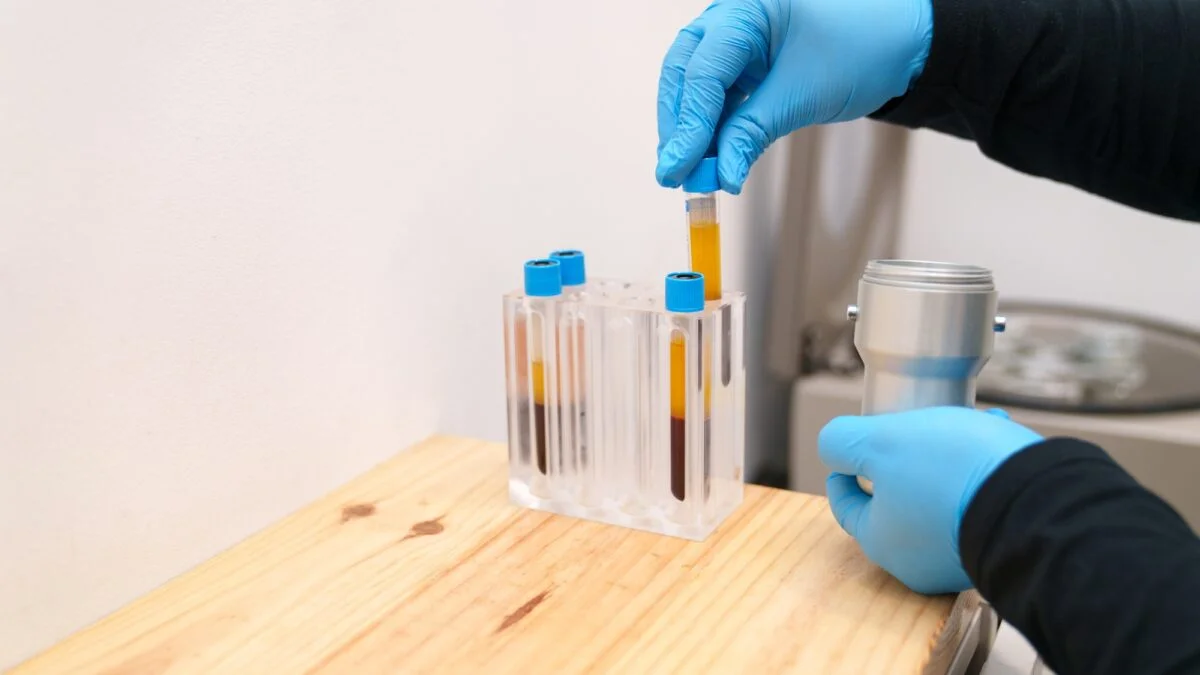
To create PRP, a small amount of blood is drawn and placed in a centrifuge. This machine spins the blood at high speed to separate the plasma and platelets from red and white blood cells. The resulting substance—platelet-rich plasma—is then injected into the area requiring treatment.
This process harnesses the body’s own platelets and growth factors, making it a natural option for managing orthopaedic injuries and degenerative conditions.
How Does PRP Work in Orthopaedics?
In orthopaedics, PRP injections are used to reduce inflammation in damaged or inflamed tissue. This may help reduce inflammation and pain over time.
PRP is commonly used to treat:
- Joint degeneration – including PRP for knee arthritis, hip pain, and PRP for osteoarthritis
- Tendon injuries – such as PRP for rotator cuff injury, Achilles tendinopathy, and tennis elbow
- Ligament injuries – including PRP for ligament tears and joint instability
- Muscle strain and overuse – like PRP for muscle strain and sports-related injuries
- Chronic conditions – such as shoulder tendonitis
Patients who haven’t responded well to traditional treatments often explore PRP as an alternative or complementary option.
What Conditions Does PRP Treat?
PRP therapy is used across a wide range of musculoskeletal concerns. It’s particularly helpful for conditions where recovery is slow or incomplete due to limited blood supply or chronic overuse.
Common uses include:
- PRP for joints: knees, hips, shoulders, ankles
- PRP for tendons and ligaments: especially in areas that tend to degenerate over time
- Sports injuries: where PRP may be considered
To see if your condition is suitable for PRP, consult with your provider for an accurate diagnosis and personalised plan.
Is PRP Therapy Safe?
Since PRP is derived from your own blood, the risk of adverse reaction is minimal. The procedure is performed under sterile conditions and often guided by ultrasound to ensure accurate placement.
Like any medical treatment, there are some considerations. Patients may experience mild swelling or soreness at the injection site. These effects are usually short-lived and manageable.For more on this topic, read our article on PRP therapy risks and benefits
Dr John PRP sees patients from Castle Hill, Norwest, Baulkham Hills, Kellyville, Pennant Hills, Bowral, Mittagong, and Moss Vale. To discuss your injury or condition, book a consultation online.
For further reading, visit the Healthdirect Australia’s introduction to platelet-rich plasma.