Yes — PRP can help Achilles tendinopathy, particularly chronic mid-portion cases that have not responded to eccentric loading and physiotherapy.
The Achilles tendon is the largest and strongest tendon in the human body. It is also one of the most commonly injured. Achilles tendinopathy is a painful, often chronic condition. It affects runners, weekend athletes, and people who have simply been on their feet too much. It can be stubborn, recurring, and deeply frustrating when standard treatments don’t provide lasting relief.
This guide is for people with Achilles tendinopathy in Sydney’s north-west, the Hills District, and the Southern Highlands. It explains the full range of options available. It also looks at why regenerative treatments like PRP are gaining traction as an effective approach.
Understanding Achilles Tendinopathy
The Achilles tendon connects the calf muscles (gastrocnemius and soleus) to the heel bone (calcaneus). It transmits the powerful forces of walking, running, and jumping. During running, it bears loads of up to 8–10 times your body weight.
Tendinopathy refers to a degenerative process within the tendon itself. The normal collagen structure breaks down and is replaced by disorganised, pain-sensitised tissue. This is distinct from an acute tendon rupture, which is a sudden, complete tear. However, chronic tendinopathy does increase the risk of rupture.
There are two main presentations:
- Mid-portion Achilles tendinopathy — pain and thickening in the middle section of the tendon, typically 2–6cm above the heel. This is the most common form and responds well to loading-based rehabilitation
- Insertional Achilles tendinopathy — pain at the point where the tendon attaches to the heel bone. Often accompanied by a bony spur (Haglund deformity) and tends to be more resistant to treatment
Symptoms
- Pain and stiffness in the back of the heel, especially in the morning or after rest
- Pain that warms up during activity but returns afterwards
- Swelling or a visible thickening of the tendon
- Tenderness when pressing on the tendon
- Reduced ability to exercise or perform at your previous level
Conventional Treatment
The gold standard first-line treatment for mid-portion Achilles tendinopathy is a structured eccentric or heavy slow resistance loading programme. This involves specific calf raises performed in a slow, controlled manner, with progressive load. It is ideally guided by a physiotherapist experienced in tendon rehabilitation.
Other conservative measures include:
- Load management — reducing training volume and avoiding high-impact activities during the acute phase
- Heel raises — temporarily reducing the load on the tendon by raising the heel
- Shockwave therapy (ESWT) — evidence-backed, non-invasive treatment that uses acoustic waves to stimulate tendon healing; often effective for chronic cases
- NSAIDs — limited role; may reduce pain acutely but can interfere with tendon remodelling
- Cortisone injections — generally avoided for Achilles tendinopathy due to the well-documented risk of tendon rupture with repeated injections
When Conservative Treatment Isn’t Enough
A significant proportion of patients do not achieve satisfactory improvement with physiotherapy alone. This is particularly true for those with insertional tendinopathy or long-standing mid-portion disease. For these patients, the next options have traditionally been shockwave therapy, PRP, or surgery. Achilles surgery carries real risks and a lengthy recovery. For this reason, most patients and clinicians prefer to exhaust all non-operative options first.
PRP for Achilles Tendinopathy
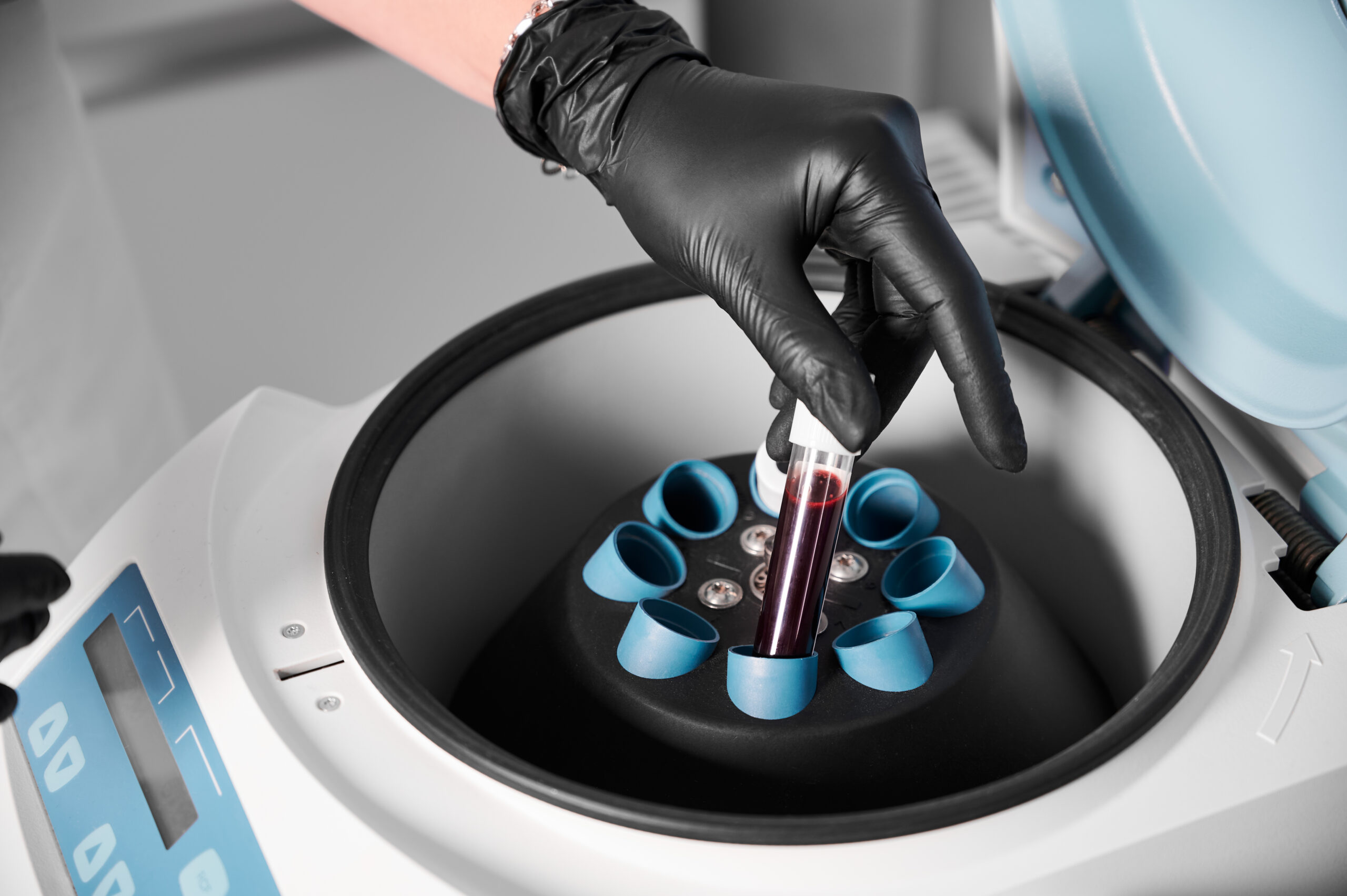
PRP therapy for Achilles tendinopathy involves injecting a concentration of your own growth factors into the degenerated area of the tendon. The injection is performed under ultrasound guidance. The growth factors in PRP — including PDGF, TGF-β, and EGF — promote the synthesis of new collagen. They also reduce the abnormal cellular environment within the tendon and stimulate the vascular ingrowth that supports healing.
Clinical evidence for PRP in Achilles tendinopathy is encouraging, particularly for mid-portion disease. Studies have shown improvements in pain, tendon structure on imaging, and return-to-activity rates. Most patients receive one to two injections, combined with continued physiotherapy-directed loading.
PRP avoids the rupture risk associated with cortisone, uses your own biology, and has a very favourable safety profile. This makes it an attractive bridge between physiotherapy and surgery. It suits patients who haven’t responded adequately to conservative measures alone.
Get Expert Advice in Sydney’s North-West or the Southern Highlands
Achilles tendinopathy requires an accurate diagnosis to distinguish it from other causes of heel pain, and an individualised treatment plan. At Dr John PRP, we assess patients from Castle Hill, Norwest, Baulkham Hills, Kellyville, Pennant Hills, Bowral, Mittagong, Moss Vale, and surrounding areas.
If Achilles pain has been limiting your activity and you’ve not found lasting relief, book a consultation to explore whether PRP might be right for you.
For more information, visit Healthdirect Australia’s guide to Achilles tendon problems.
If you would like to discuss treatment for this condition, learn more about our approach to Achilles tendinopathy.
Frequently Asked Questions
Can PRP treat Achilles tendinopathy?
Yes. PRP can help Achilles tendinopathy, particularly chronic mid-portion cases that have not responded to eccentric loading and physiotherapy. It uses concentrated platelets from your own blood to support healing in the tendon.
How long does recovery from Achilles tendinopathy take?
Recovery is usually gradual, often over several weeks to a few months, and depends on the severity and how long the problem has been present. A structured loading program alongside treatment is important for a durable result.
How many PRP injections are needed?
Most patients require a course of 2 to 3 PRP injections spaced several weeks apart, though the exact number depends on the severity and chronicity of the tendon problem. Your treatment plan is tailored following assessment.
Do I need a referral to be assessed?
Not usually. If you already have a diagnosis you can often book directly. For more complex cases we may recommend consulting your GP first. We see patients across Sydney’s North-West and the Southern Highlands.