
Understanding PRP for knee arthritis
Knee arthritis is one of the most common causes of chronic joint pain, especially among older adults and athletes. As wear and tear gradually erode the cartilage in the knee, patients may experience swelling, stiffness, and limited mobility. Traditionally, treatment options have ranged from lifestyle modifications and physiotherapy to invasive surgery. However, recent developments in orthobiologic treatment are offering new alternatives. One of the most talked-about is platelet-rich plasma (PRP) therapy, particularly for knee arthritis. This guide looks at how PRP for knee arthritis works and what the evidence shows.
PRP injections involve using a concentrated solution derived from the patient’s own blood. This solution contains platelets rich in growth factors that are believed to reduce inflammation. Some people seek non-surgical approaches to managing knee arthritis. For them, PRP therapy has gained traction as a valuable tool within orthopaedic PRP treatments.
What the Latest Research Says
Recent research studies are beginning to clarify where PRP fits into the treatment landscape for knee osteoarthritis. A 2024 systematic review in the Journal of Orthopaedic Research examined PRP therapy. It concluded that PRP shows promising results for pain and function in mild to moderate osteoarthritis. The benefit was clearest when compared to placebo or saline injections.
Another comparative study appeared in the American Journal of Sports Medicine. It found that PRP reduced pain scores more effectively than hyaluronic acid over a 12-month period. However, the results also highlighted variability in patient outcomes. This often depended on the stage of arthritis, the PRP preparation method, and factors such as age and overall health.
The Australian Orthopaedic Association notes that PRP for knee arthritis is not yet a standardised treatment. Even so, it represents a growing area of interest that may complement traditional care pathways.
How PRP Injections Work for Knee Arthritis
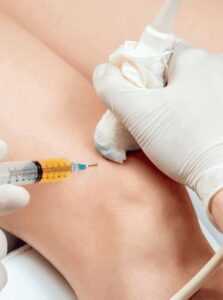
The process begins with a standard blood draw. A centrifuge then spins the sample to isolate the platelet-rich portion of the plasma. This concentrated solution is then injected directly into the knee joint, typically under ultrasound guidance to ensure precise placement. The goal is to reduce inflammation.
Patients typically receive one to three injections spaced several weeks apart, depending on individual response and clinical recommendation. PRP for joints is not intended to regrow cartilage. Instead, PRP for joints aims to modulate the joint environment in a way that can relieve symptoms and improve mobility.
What to Expect After a PRP Injection
The PRP injection recovery time is generally short. Most patients can resume daily activities within 24 to 48 hours. However, high-impact exercise should be avoided for at least a week. Mild swelling or discomfort around the injection site is common but usually subsides within a few days.
PRP aims to reduce inflammation, leading to pain reduction. Improvements may take a few weeks to become noticeable. Peak results are often seen two to three months after the injection.
For a detailed overview of the process, visit our step-by-step PRP guide.
Benefits and Limitations
One of the primary PRP treatment benefits for knee arthritis is that it uses the patient’s own biological material, minimising the risk of allergic reaction or infection. PRP injections are also minimally invasive and do not involve surgical downtime.
However, PRP is not a cure. Patients with severe arthritis or joint deformities may benefit less. Those in the earlier stages of the disease tend to respond better. Outcomes can also vary based on how the PRP is prepared and administered. For this reason, it is important to choose an experienced PRP clinic.
If you’re living with knee arthritis in Sydney’s north-west (Castle Hill, Norwest, Baulkham Hills, Kellyville) or the Southern Highlands (Bowral, Mittagong, Moss Vale), book a consultation with Dr John PRP to explore whether PRP treatment is appropriate for your stage of arthritis.
For further reading, visit the latest PubMed research on PRP for knee arthritis.
To learn more about our approach, see PRP for knee osteoarthritis.