
Orthobiologic treatment uses your body’s own platelets and growth factors. In the case of PRP, the aim is to reduce inflammation, leading to pain reduction. In orthopaedics, PRP is the most widely researched orthobiologic application. Learn about the PRP procedure, or review the clinical evidence.
This article explores the principles of orthobiologic treatment and explains how PRP therapy works. It also takes a closer look at its potential benefits for joints, tendons, and ligaments.
What Is Orthobiologic Treatment?
Orthobiologic treatment uses substances derived from the body, such as platelets, with the aim of reducing inflammation. It does not replace damaged tissue with prosthetics.
In orthopaedics, orthobiologic treatment focuses on soft tissue recovery (tendons, ligaments, and muscles), joint support, and improving mobility and function. Treatments may include stem cells, tissue engineering, or biological injections like PRP therapy.
What Is Platelet-Rich Plasma?
Platelet-rich plasma (PRP) is a concentration of platelets derived from your own blood. Platelets are best known for their role in blood clotting. They also contain numerous growth factors that play a key role in recovery.
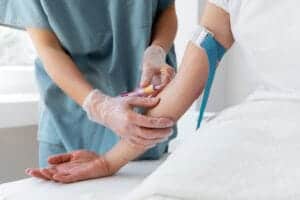
During PRP therapy, a small sample of your blood is drawn. It is processed in a centrifuge to separate the plasma and concentrate the platelets. The resulting PRP is then re-injected into the targeted tissue. This delivers the growth factors directly to the site of injury or degeneration.
How Does PRP Therapy Work?
PRP therapy aims to reduce inflammation in the body by:
- Stimulating the activity of local cells
- Releasing growth factors at the site of injection
- Regulating inflammation that may be interfering with recovery
- Promoting the formation of new blood vessels (angiogenesis)
- Reducing inflammation in the treated area
This localised biological stimulus can be especially helpful in areas of poor blood flow. Tendons and cartilage are good examples, since their natural recovery is often limited.
What Conditions Can PRP Treat?
There is growing interest in using orthopaedic PRP for a range of musculoskeletal injuries and chronic conditions. Common applications include:
- PRP for knee pain caused by early osteoarthritis
- PRP for tendons such as tennis elbow and Achilles tendinopathy
- PRP for shoulder pain due to rotator cuff injury or shoulder tendonitis
- PRP for ligament tears and joint instability
As with all treatments, patient selection and individual assessment are key. Some patients report improvements in pain and function. Results may vary, and PRP is not considered a cure or guaranteed solution.
The Science Behind PRP: What the Research Shows
While the field of orthobiologic treatment in Australia is still evolving, research studies have shown promising results for certain conditions:
- A 2021 meta-analysis in The American Journal of Sports Medicine found that PRP was more effective than hyaluronic acid for knee osteoarthritis in terms of pain reduction.
- Multiple studies suggest that PRP may reduce symptoms in patients with chronic lateral epicondylitis (tennis elbow) when conservative treatments have failed.
- PRP has also shown potential benefits for shoulder conditions, such as partial rotator cuff tears and tendinopathies.
These findings are encouraging, but PRP results depend on several factors. These include condition severity, patient age, tissue quality, and rehabilitation compliance.
How Long Does PRP Therapy Take?
A PRP injection session typically takes under an hour, including preparation, blood draw, centrifuge processing, and injection. Ultrasound guidance is often used to ensure precision. Most patients can return to light activities the same day. Full recovery may take several weeks, depending on the condition.
To find out whether PRP therapy is appropriate for your condition, book a consultation with Dr John PRP. We welcome patients from across Sydney’s north-west — including Castle Hill, Norwest, and Pennant Hills — and from the Southern Highlands including Bowral and Mittagong.
For further reading, visit the scientific research on orthobiologic treatment and PRP.