
PRP therapy and traditional treatments such as cortisone injections work on different timelines. Cortisone tends to work faster but its effect is usually temporary; PRP takes longer to show results and aims to reduce inflammation, leading to pain reduction. See our PRP vs cortisone comparison, or review the clinical evidence.
In this article, we explore PRP vs. traditional treatments to help you understand the potential benefits, limitations and considerations when planning your orthopaedic recovery.
What Is PRP Therapy?
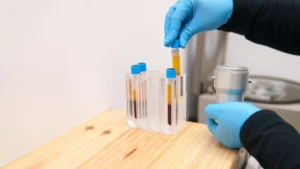
PRP therapy involves drawing a small amount of your own blood. It is processed in a centrifuge to isolate a concentration of platelets. This platelet-rich plasma is then injected into the area of injury. Platelets are naturally rich in growth factors. These growth factors aim to reduce inflammation.
PRP treatment is most commonly used for tendon, ligament and joint-related conditions and is typically performed as an outpatient procedure. It is part of a broader trend in orthobiologic treatment. The focus is on reducing inflammation, leading to pain reduction.
What Are Traditional Treatments in Orthopaedics?
Traditional orthopaedic treatments vary depending on the injury or condition but may include:
- RICE: rest, ice, compression, elevation for acute injuries
- Physiotherapy to restore mobility, strength and joint function
- Bracing or supportive devices
- Injections (including corticosteroids)
- Surgery for severe cases such as ligament ruptures or degenerative joint disease
These approaches are evidence-based and often effective. However, they may carry risks, require longer recovery, or fail to address underlying tissue quality in chronic cases.
Comparing PRP and Traditional Treatments
Here’s how PRP compares with common traditional therapies:
- Treatment Approach
Traditional treatments often manage symptoms or stabilise the injury site. PRP aims to reduce inflammation by delivering concentrated growth factors directly to damaged tissue. - Invasiveness
PRP therapy is minimally invasive and performed in a clinic setting. Surgery, on the other hand, involves greater risk, cost and downtime. - Recovery Time
Recovery from PRP treatment is typically shorter than surgical recovery. However, results may be gradual and require commitment to rehabilitation for best outcomes. - Repeatability
PRP can be repeated if needed. While some traditional treatments (like bracing) are temporary, others (like surgery) are irreversible. - Risk Profile
PRP uses your own blood, which reduces the risk of reaction or infection. However, mild discomfort or post-injection soreness is not uncommon. Traditional treatments may carry medication-related side effects or surgical complications.
Which Conditions Are Being Treated With PRP?
PRP is being explored as a treatment for a range of orthopaedic injuries, including:
- PRP for tennis elbow
- PRP for rotator cuff injury
- PRP for Achilles tendinopathy
- PRP for ligament tear in the knee or ankle
- PRP for knee arthritis
- PRP for shoulder tendonitis
- PRP for muscle strain and chronic joint pain
PRP is not a replacement for surgery in all cases. But it may be a useful intermediate option for patients who have not improved with conservative care.
PRP vs Cortisone Injections
Patients often ask how PRP compares with cortisone injections. Cortisone may quickly reduce inflammation and pain, but its effects are temporary and repeated use may affect tissue quality. PRP, in contrast, aims to reduce inflammation over a longer period. The best choice depends on your goals, timing, and underlying condition.
To read more on this, you may also be interested in our dedicated article on PRP vs. cortisone injections.
What the Research Says
While PRP therapy has shown potential in studies on tendon recovery and joint pain, results are still variable. Systematic reviews highlight mixed findings depending on the condition, treatment protocol, and patient factors. Research is ongoing, and patients are encouraged to discuss available evidence with a medical professional.
Patients attend Dr John PRP from across Sydney’s north-west including Castle Hill, Norwest, Kellyville, and Baulkham Hills, as well as from Bowral, Mittagong, and the broader Southern Highlands. Book a consultation today to find out whether PRP is right for you.
For further reading, visit the Healthdirect on comparing orthopaedic treatment options.