
PRP therapy may be an option for soft tissue injuries, including tendon strains, ligament sprains, and muscle tears. In these tissues, a limited blood supply slows natural recovery. By concentrating your blood’s own growth factors and injecting them precisely into the damaged area, PRP aims to reduce inflammation. Explore our conditions we treat, or see the clinical evidence.
First, this guide outlines how PRP therapy works and what types of soft tissue injuries may benefit. Then it explains what to expect from the treatment process.
What Are Soft Tissue Injuries?
Soft tissue refers to non-bony structures like muscles, tendons, and ligaments. These tissues are critical for movement and joint stability. However, they are also prone to injury from overuse, trauma, or ageing. Common soft tissue injuries include:
- Tendon injuries, such as Achilles tendinopathy, rotator cuff tendinosis, and tennis elbow
- Ligament sprains, including ankle sprains and ligament tears in the knee or shoulder
- Muscle strains, such as hamstring or calf strains
- Chronic soft tissue pain from repetitive stress or partial tears
Soft tissue injuries often involve microscopic damage, inflammation, or impaired blood flow. This can delay recovery, especially in poorly vascularised areas like tendons and ligaments.
How PRP Therapy Works in Soft Tissue
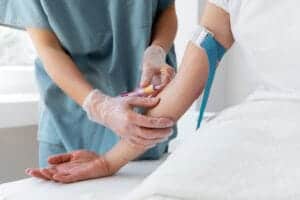
PRP therapy involves drawing a small amount of your blood. A centrifuge then processes it to concentrate the platelets. Finally, the clinician injects the platelet-rich plasma into the injured tissue. Platelets contain growth factors and signalling proteins that reduce inflammation.
When injected into injured soft tissue, PRP may:
- Reduce inflammation in tendon or ligament fibres
- Encourage angiogenesis (formation of new blood vessels) for improved tissue nutrition
- Modulate inflammation to support the transition from chronic injury to recovery
- Reduce inflammation in muscle fibres
PRP for Tendon Injuries
Tendons are strong connective tissues that anchor muscles to bones. They endure repetitive loading and are prone to degeneration over time. PRP for tendons is commonly used in cases of:
- Achilles tendinopathy
- Rotator cuff tendinosis
- Tennis elbow (lateral epicondylitis)
- Golfer’s elbow (medial epicondylitis)
- Patellar tendinopathy (“jumper’s knee”)
In these conditions, PRP injections may help by delivering growth factors directly into the affected tendon, reducing inflammation and pain. The response is often gradual, with improvements typically noticed over weeks to months as collagen remodelling occurs.
PRP for Ligament Injuries
Ligaments connect bones and provide joint stability. When overstretched or torn, they may take a long time to recover, particularly if blood flow to the area is limited. PRP for ligament injuries is often explored in:
- Partial ligament tears (e.g., MCL sprains in the knee)
- Chronic ankle instability
- Shoulder capsule or labral damage
- Mild-to-moderate ligamentous laxity
PRP aims to reduce inflammation, which may lead to less pain.
PRP for Muscle Strains
Muscle injuries typically recover faster than tendon or ligament injuries, thanks to a better blood supply. Even so, PRP may still be beneficial in certain scenarios:
- Severe muscle strains or partial tears
- Hamstring or quadriceps injuries in athletes
- Muscle injuries that are slow to resolve with rest alone
For example, PRP for muscle strain aims to reduce inflammation, which may lead to less pain.
What to Expect: The PRP Process for Soft Tissue Injuries
If you’re considering PRP for a soft tissue injury, here’s what typically happens:
- Consultation and imaging: Your doctor evaluates the injury and may use ultrasound or MRI to determine if PRP is appropriate.
- Blood draw and PRP preparation: A small sample of your blood is processed in a centrifuge to isolate the platelet-rich component.
- Guided injection: Using ultrasound guidance, the PRP is injected into the targeted tendon, ligament, or muscle.
- Post-injection care: You may experience soreness for a few days. Gentle movement is often encouraged, with physiotherapy introduced gradually.
- Recovery timeline: Recovery may take several weeks to months, depending on the tissue involved and your adherence to the rehabilitation plan.
PRP is often most effective when combined with physiotherapy, which supports mobility, strength, and neuromuscular control.
Are you looking for PRP treatment in Sydney’s north-west or the Southern Highlands? Contact Dr John PRP to arrange a thorough assessment. We see patients from Castle Hill, Norwest, Kellyville, Rouse Hill, Bowral, and Mittagong.
For further reading, visit the clinical evidence for PRP in soft tissue recovery.
To learn more about our approach, see PRP for tendinopathy.